This article was a lecture held at the Conference of the
Astronomical Observatory of the University of Rome
The Proceedings of the International Conference "COSMOLOGY THROUGH
TIME" (June 17-21, 2001) will be published in the journal Memorie della
Società Astronomica Italiana.
CONSIDERATION OF THE ORIGIN OF THE YEARLY COUNT IN THE JULIAN AND THE GREGORIAN CALENDAR
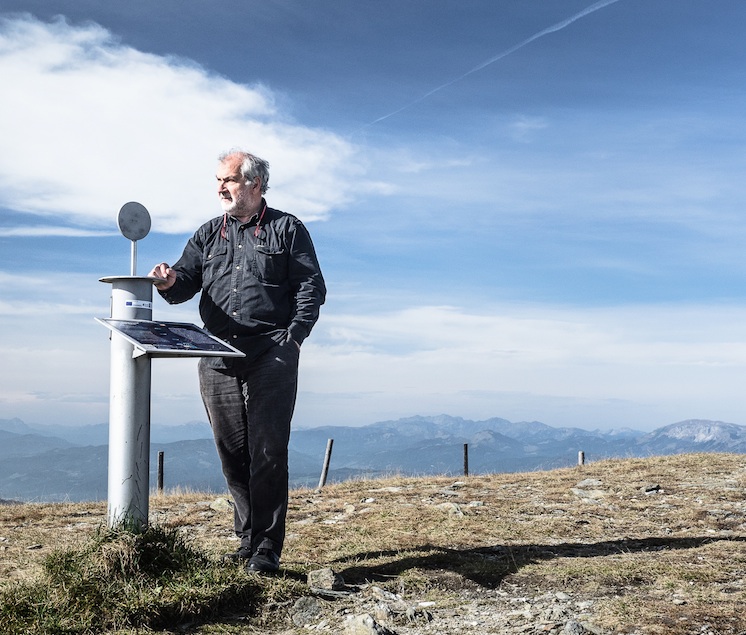
SEPP ROTHWANGL
CALENdeRsign
A-8020 Graz (Austria )
Erlengasse 12
calendersign@chello.at
ABSTRACT.
It is outside the realm of probability that the Dionysian yearly counting
Anno Domini (AD), was determined randomly. It is, however, probable that
the adjustment of this yearly count had the aim eliciting the coincidence
of a conjunction of all planets with the second millennium in order to mark
the end of an assumed religious age. With the alignment of 531 CE as the
astronomical basis for calculation, stimulated by the end-of-world fear
resulting from the Anno Mundi chronology (AM), Dionysius Exiguus, with his
adjustment of 1 AD, killed two birds with one stone: calculating a Greatest
Year and letting it coincide with the assumed end of a Platonic age, with
the result that the conjunction occurred at the millennium (the conjunction
of all planets in May 2000).
1. How do we count the years in the common Christian Gregorian calendar?
Anno Domini (AD) or Christian or Common Era (CE) counts the years after the adjusted date of Christ's incarnation, which traditionally is celebrated annually at 25th March during the former Northward Spring Equinox (NSE). To this count, introduced in sixth century by Dionysius Exiguus, we owe the calendrical numbering of the current years as well as the jubilee with the second millennium.
To answer
the question of how we calculate years or time at all, it is necessary to
describe the worldview and religious background of the age when the time
calculation was created.
For example, Franz Boll said:
Mankind measures time using the stars. Lay people, whose knowledge is based
on belief, rather than science, say: "The course of the stars
determines time," and from this, religious people derive the saying
that "Heaven guides everything on Earth." (Boll, 1903).
Even in the prayer, the words “on earth as in heaven” implies that believers
and superstitious folk expect good or bad events to come from the positions
of the stars, and they construct horoscopes to predict the future or derive
the power of political leaders from the stars. The dividing lines between
knowledge, belief, religion, and superstition are blurred and depend on
some particular point of view. Like a puzzle, these concepts can be put
together in a way that will help us understand it all.
If we assume Jesus Christ was a historical person and accept the story
of his birth accept as a fact, we have several indications for his date
of birth, such as the death of Herod the Great in 4 BCE and the appearance
of the Star of Bethlehem, which may have been a triple alignment of Jupiter
and Saturn in 7 BCE (Ferrari D’Occhieppo, 1994), or some other astronomical
events, like a conjunction and occultation in 6 BCE (Molnar, 1999), or even
a comet in 12 BCE (Baratta, 2001). But even if we assume that the Gospel
of Matthew is only myth and literature, there is a core of truth telling
of this star. All these possibilities lead to a date rather different than
our present yearly count.
2. The circumstances of the creation of the AD count.
Early Christianity used several other calendar systems before introducing
the AD count, such as counting the years of the rule of the Roman emperor
Diocletian, and the Anno Mundi (AM), an era counting years beginning at
the assumed creation of Adam (world). The AM yearly counting system was
the base of the five-volume Chronography of Sextus Julius Africanus, which
he published during the consulate of Gratus and Seleucus (AD 221). Although
it has since been lost, there are many other authors who mention or give
excerpts describing his AM (creation of the world) count, which became very
popular. The AM count is based on a teleological concept that would provide
history with God's plan of salvation and thus is constructed on a time
frame that depends on the words of the Bible:
Ps. 90:4: For a thousand years in thy sight are but as yesterday when
it is past, or as a watch in the night.
2 Peter 3:8: one day is with the Lord as a thousand years, and
a thousand years as one day.
Similar words are found also in the Koran, which declares:
Sure 22: Verily a Day in the sight of thy Lord is like a thousand years of
your reckoning. Again, Sure 32: He rules affairs from the heavens to the
earth: in the end will (all) go up to Him, on a Day, the space whereof will be
(as) a thousand years of your reckoning.
In the concept of Africanus, the biblical seven-day creation plays a major
role, and in this time frame, 6000 years (relating to the six days of creation
of the world in Genesis) would elapse between the creation of the world,
and the seventh day would be the Day of the Lord or Day of Judgment.
In addition, a time concept developed describing the whole history of the world within one single day of 12 hours, a kind of doomsday. (Please consider that modern cosmology also uses a similar concept to explain cosmic development, and this view has mankind appearing in the last seconds of the day.)
This depiction was in accordance with a seven-day time frame, because the Bible
says Adam was created on the sixth day (Friday) of the week, also supposedly
the weekday when Christ (the second Adam) was crucified.
The assumed 6000 years of human history were equated in this time concept to
only one single "Christian doomsday," in which Christ appeared during
the last (11th) hour.
"Writing in the first half of the third century, Origen, in his
Commentary on Matthew, employed this analogy of the twelve hours of the
day to divide the whole of biblical history into ages. Accordingly, he locates
Noah at the third hour, Abraham at the sixth, Moses at the ninth, and, finally,
Christ at the eleventh hour." (Declercq, 2000)
A passage
in the New Testament seems to agree with this concept of AM that Christ appeared
in the 11th (the last) hour.
I John 2:18: "Children, it is the last hour; and as you have heard that
antichrist is coming, so now many antichrists have come; therefore we know that
it is the last hour."
Consequently, in the AM count, the date of Christ’s birth was adjusted in
the middle of sixth millennium to the year AM 5500, because it corresponded
with the 11th hour of the available 12. (6000 : 12 * 11 = 5500)
The AM method profoundly influenced early Byzantine and Roman Christian
chronology, as shown in the chronicles of Hippolytus in Rome, Sulpicius
Severus, Panodoros, and others. Out of this concept arose the Alexandrian
method of Annianos, who lived in the year that the patriarch Theophilus
died (AD 412), and later the Byzantine yearly count, which is still in use
by some Orthodox groups. The six-day time frame was in harmony with the
six-ages-of-man doctrine of St. Augustine of Hippo, who paralleled
the moment of Christ's coming with the step from the fifth to the
sixth and last age in the life of a man, which takes place between maturity
and senility.
The world eras of these authors, and therefore the date of creation, differ
from each other by several years, being adjusted to lunar cycles and best-fitting
Easter rules. The year 1 AD, for example, corresponds in the Alexandrian
count to AM 5493, in the Byzantine count to AM 5509, and in the basic count
of Africanus, to AM 5502.
The AM time systems became very popular, but created a huge problem: end-of-world fever, caused by a threatening Seventh Day that equated to the end of the 6000-year period and corresponded to a date 500 years after Christ's birth year.
"At the turn of the fourth to fifth centuries, i.e. precisely the moment when the barbarian invasions may have stirred up apocalyptic anxieties, the North African bishop Julius Hilarianus, for instance, wrote a treatise ”On the Duration of the World,” in which he calculates 5530 years from creation to the Passion of Christ, and 369 years from that event until the consulate of Caesarius and Atticus (AD 397); there remain, so he concludes, 101 years to go before the Resurrection of the dead." (Declercq, 2000).
The AM count produced a kind of self-fulfilling calendrical doomsday in AM 6000 that increased when, some 30 years later (about the length of Christ's lifetime) a conjunction of all planets occurred in 531 CE, after which - as ancient philosophers like Plato and Pythagoras said - everything that happened since beginning of time was expected to repeat in exactly the same way.

Image:
Planetary alignment of 31-May 531CE; JDN 1915156
Right ascension: Moon 4h 35m; Sun 4h 35m; Mercury 4h 36m; Venus 5h 56m;
Mars 4h 35m; Jupiter 5h 45m; Saturn 5h 33m.
There were three strategies available to combat the fear caused by this time
concept, averting Chiliasm, Millenarianism, and world-end fever:
1) shift the era of creation to the past in order to show that the dreaded
year AM 6000 had long passed, as did the chronicler John Malalas identifying
year 6000 with passion of Christ;
2) rejuvenate the age of the world and shift the year AM 6000 into the future,
which was the result of the fourth century chronicler Eusebius, who, influenced
by Jerome, delayed the birth date of Christ by three centuries to AM 5199.
According to their popular world-year-count the year 6000 would occur around 800
CE. (In fact the Venerable Bede in 9th century rejuvenated the age of the world
again for by some 1200 years, presumably because of the dreaded year 6000, and
dated the year of Christ’s birth back to AM 3952) (Bede, 1999); or
3) re-number the years from another point in time such as AUC (ab urbe condita
= the years since foundation of Rome) or AD, instead of the numbering the
years from the creation of the world.
These strategies provided people with a variety of yearly counts. One method,
still valid in the Gregorian calendar, was AD of Dionysius Exiguus.
3. The adjustment of the year of incarnation (AD) in the Liber de Paschate.
We owe the origin of the yearly count to the Scythian canonist and chronologer, Dionysius Exiguus, who first suggested this count in his Liber de Paschate (“Book of Easter”).
The crucial lines to Bishop Petronius, addressed as “dominus beatissimus et nimium desideratissimus pater” read in the “epistola prima deratione paschae” (Dionysius, 2000).
Quia vero sanctus Cyrillus primum cyclum ab anno Diocletiani centesimo quinquagesimo tertio cœpit et ultimum in ducentesimo quadragesimo septimo terminavit, nos a ducentesimo quadragesimo octavo anno ejusdem tyranni potius quam principis, inchoantes, noluimus circulis nostris memoriam impii et persecutoris innectere, sed magis elegimus ab incarnatione Domini nostri Jesu Christi annorum tempora prænotare, quatenus exordium spei nostræ notius nobis existeret, et causa reparationis humanæ, id est, passio Redemptoris nostri, evidentius eluceret.
The significant words translated into English read:
“…Because the blessed Cyril began his first cycle in the 153rd year of Diocletian and ended his last cycle in the 247th year of Diocletian, we have to start in the 248th year of this man who was a tyrant rather than emperor. However, we did not want to preserve the memory of an impious persecutor of Christians in our cycles, but chose rather to mark the times with the years from the incarnation of our Lord Jesus Christ, so that the commencement of our hope will appear more familiar to us and the origin of the redemption of mankind, that is the Passion of our Redeemer, will shine in a more glorious way." (Declerq, 2000)
As scholars and the Christian paradigm say, Dionysius had no concrete
data for the date of Christ's birth, but was focused on a best-fitting Easter
cycle and therefore he made a mistake in the date when he fixed his year
of incarnation.
4. Critical analysis of the arguments that Dionysius gives for the adjustment.
If one looks at this text more closely, Dionysius gives us four reasons for his argument that must be more critically considered:
1. Dionysius explains superficially - without mentioning the AM count -
that he links the new Easter-cycle to the incarnation of Christ, and no
longer to the years of Diocletian, because he was a cruel persecutor of
Christians. He adjusts the beginning of this new count to a year that is
532 years before the 248th year of the Diocletian era and
thus arrives at the year 1 AD, which generates the new yearly counting and
offers a new starting point. It is evident, as mentioned above concerning
the problems with the AM count, that to shake off the pagan heritage of
the Diocletian calendar was not the only reason to invent a new yearly count.
2. Please note that Dionysius calls his count “anno ab incarnatione Domini
Iesu Christi.” The Christian feast of incarnation is celebrated traditionally
on March, 25th at former Northward Spring Equinox (NSE) and relates
to the former beginning of the new year and to Pisces, which, due to precession,
became the new spring equinox constellation during this time and is expressed
in the first Christian symbol, ICHTHYS (i.e., fish in Latinised Greek),
meaning the new spring equinox constellation and dawn of the age of Pisces
(Santillana and Dechend, 1994). This pictograph expresses, in a way, what
is called in German "Zeitgeist" - the feeling of this newly starting
age. It is also seen in the symbol of the sacrificed lamb, which mirrors
the expired age of Aries.
ICHTHYS is a pictograph of the acronym: Iesous CHristos THeou HYios
Soter (Jesus Christus, son of God, Savior).


Images: The petroglyphs from the catacomb di S. Callisto show the first symbols of Roman Christian tombs: fish; the Greek acronym for fish, which is for the Latin ICHTHYS; shepherd with sacrificed lamb (Aries); symbol XP (Chi and Rho, Greek letters symbolizing Christos); and anchor. (photos by Calendersign, 2001)
3. Dionysius said that it was necessary to start a new cycle because the Easter cycle of St. Cyril had ended in the 247th year of the Diocletian era. The statement that Dionysius had to calculate a new Easter-cycle starting with the year 248 of Diocletian because no other was available is without any basis and appears to be a pretext. Certainly there were a lot of other calculations of Easter being made at that time that worked for many decades or centuries into the future. For example, almost 100 years before Dionysius, the computist Victorius of Aquitaine calculated a 19 x 28 = 532 year Easter cycle.
4. The 247th year of Diocletian, which is mentioned as last year of St. Cyril’s cycle, was a “Greatest Year”, when on 31 May 531 CE all planets visible to naked-eye including the sun and the moon were in close conjunction. This event was for the Indian astronomer Aryabhata of Kusumpara reason for a calculation and adjustment of the Indian age, called Kali Yuga, which he published in his work called Aryabhatiyam. As B. L. van der Waerden and R. Billard show, Aryabhata used the common multiple of the planetary periods to figure out a similar alignment of all classical planets on 17th Feb. 3102 BCE and established there the start of the Kali Yuga (Waerden, 1968, 1972, 1980). We find the same date later in Persian and Arabic chronologies, such as Abu Mashar’s “Book of the Conjunctions”, where it is identified as the date of the Deluge. Abu Mashar calculated from there 3671+1 years until the triple alignment of Jupiter and Saturn (571 CE), which he called the conjunction announcing the Arab people (Burckhardt and Waerden, 1968). Interestingly, there is dated also the birth of Mohammad.<
Image: Planetary alignment on 17 - Feb - 3102 BCE; JDN 588465
Right ascension: Moon 21h 2m; Sun 20h 27m; Mercury 19h 25m; Venus 21h 20m;
Mars 20h 14m; Jupiter 21h 22m; Saturn 18h 29m.
5. The hidden goal and chronological result of the calculation by Dionysius Exiguus.
It is reasonable to assume Dionysius may have done the same as Aryabhata, who
calculated and located a planetary alignment more than 3,600 years from
his age into the past. But could Dionysius have calculated into the future?
The answer to this question lies in the consideration of the apocalyptic
belief and expectation of the Lord’s return found in Christianity.
Chronologically or astrologically considered, this return could occur at
a similar event as the Star of Bethlehem, or after a time period like the
2,000-year-long assumed age of Pisces, which began with the incarnation
of Jesus. On the other hand, Christ's return could occur at the end of the
so-called Large Year, when an alignment of all planets takes place and,
as the old cyclical worldview tells, the movements of the planets brought
them back to the same location in the Greatest Year as at the beginning
of time, a point from which the planets would start out anew, like
the hands of a watch from 12:00. Both of these are encoded in the Book of
Revelation, which discusses the end of time (Boll, 1914; Santillana and
Dechend, 1994)
6. The significance of the constant of precession in relation to the length of an age.
To calculate the time period of an age, another celestial movement beside planetary alignments is involved. It is the precession of the equinoxes, due to the gyroscopic movement of Earth’s axis.
The length of an age is limited by the duration in which a current constellation,
year by year, functions as the announcer of the spring equinox until it
is replaced by the next. Such an age is also called a Platonic month, while
the whole wobble of Earth’s axis describes the cycle of precession in the Platonic year with about 25,800 years. Hipparchos and
Ptolemy reckoned the equinoctial precession's value as 100 years
for each 1° shifting on the ecliptic. (Ptolemaios, Heiberg 1903).
Later Sassanian, Persian, and Arabic astronomers reckoned its value at 66.6
years for each 1°, which led to an accepted duration of 2000 years for each
30° (average ecliptic length of one constellation) of the zodiac (See list
of medieval testimony of precessional constant 66.6 years/1° in Appendix).
The number 666, the “Number of the Beast” in Revelation describes the assumed constant of precession of 66.6 years for each 1° in a hidden, cryptic way. Please be aware that in Greek, “zodiac,” syllable by syllable, means ”circle of animals” or “circle of beasts”. It takes 666 years to shift the point of equinox along one of the 36 Decans, which are always depicted as humans on ancient zodiacs and cover the range of 10°. A calendrical and archeoastronomical analysis of Revelation shows that it deals with end of age and thus with the appearance of new equinoctial constellation due to precession (Rothwangl, 2000).
If one assumes that the age of Pisces started with Christ’s incarnation
at vernal equinox, related to the symbol ICHTHYS, and if one calculates
with the constant of precession 66.6 years each 1°, then after 2000 years
one age ends, and a new age starts. Focusing on the end of the age,
Dionysius also searched for a salient future alignment of the planets, which
is calculable by a common multiple of the planetary periods. Thus he found
the second significant moment: the Greatest Year, which is at the end of
the Large Year, when all the different movements of the planets bring them
to a common location and all planets align again.

Image: The alignment of all planets on 5-May-2000; JDN 2451670
Right ascension: Moon 3h 55m; Sun 2h 51m; Mercury 2h 34m; Venus 2h 14m;
Mars 3h 55m; Jupiter 3h 0m; Saturn 3h 11m.
7. Other symbolic expressions of an alignment of all planets.
What Aryabhata and Dionysius calculated was, in fact, a universal
anchor for time or creation. Aristotle called it the Greatest Year:
"... there is a yearly unit, which Aristotle calls the Greatest
Year rather than a large year. It concerns the period in which the circular
paths of the Sun, Moon and the five planets will pass through in such a
way that all these heavenly bodies are located in the same constellation....
The time in which all planets meet again in the same sign is the "Greatest
Year." In the winter of this year there will be a Cataclysm (tide or
flood disaster), in the summer will be an Ekpyrosis (world-wide fire). It
seems to be that, these periods alternate: the world is afflicted by times
of conflagration, then by times of inundation." (Censorinus, De
die natale, ch. 18)
Similar account used Platon in Timaios 39 C-D; Marcus Tullius Cicero, inSomnium Scipionis (= De re publica 6,24); Seneca in Questiones naturales III 29,1; Berossos; Gervasius of Tilbury; and many more up until Bede in de temporum ratione 9 and 31.
Ancient philosophers here are describing nothing less than the Olympic
Symposium of the Gods that took place after the creation of men by Prometheus.
This symposium of all Olympic, thus celestial, gods describes, in
old symbolic language, a meeting or conjunction, of all of the "old"
naked-eye planets. Both words mean the same thing, i.e., conjunction means
"meeting or alignment," and symposium means "sitting together
at a common meal!"
8. How it was possible
for Dionysius Exiguus to calculate the alignment of 2000 in advance?
Besides the well-known synodic planetary periods, the shape in which conjunctions
reappear, like the alignments of Jupiter and Saturn over a period of 59
years that describe a shifting triplicity, gave a definitive instrument
of forecast. One thousand years before Dionysius, the large
- 854 years lasting - commensurable period of Saturn, Jupiter, Mars,
and Sun was known (Ferrari D’Occhieppo, 1994 and Waerden, 1968). After this
period, these four celestial bodies return closely to the same location
on the zodiac and same date of a solar calendar. This means that with the
planetary positions of the year 292 CE as base, one can calculate two such
large periods and thus predict their positions for the year 2000.
9. A recently published text gives an additional clue.
A family document from the middle ages, of which only a copy has survived, offers a new view for the adjustment of 1 AD. This text gives the quotation from the Liber de Paschate in a slightly different way that reveals the secret plan of Dionysius best, if we compare it with the document that the Vatican published in the Patrologia Latina.
The Patrologia Latina text
reads:
… sed magis elegimus ab incarnatione Domini nostri Jesu Christi annorum
tempora prænotare, quatenus exordium spei nostræ notius nobis existeret,
et causa reparationis humanæ, id est, passio Redemptoris nostri,
evidentius eluceret.
The private text (Rothwangl,
2000) reads:
… sed magis elegimus ab incarnatione Domini nostri Jesu Christi annorum
tempora prænotare, quatenus exordium spei nostræ notius nobis existeret,
et causa reparationis humanæ, id est, reditus redemptionis nostrae,
evidentius eluceret.
English translation of both:
…but chose rather to mark the times with the years from the incarnation
of our Lord Jesus Christ, so that the commencement of our hope will appear
more familiar to us and the origin of the redemption of mankind, that is
the passion of our redeemer (Patrologia Latina) / return of redemption
(Wirklicht), will shine in a more glorious way.
There is a small but important difference between the two versions, which obviously deal with the same matter. The Vatican text focuses on the passion of the Redeemer, but or rent.
The comparison reveals that in fact the two documents support two completely different things. The first (passio Redemptoris) means the crucifixion of Jesus, which, however, calendrically has nothing to do with his incarnation and the year 1 AD that lies some 30 years earlier. The second (reditus redemptionis) points to the return of redemption. Redemption started in the past with Christ’s incarnation, calendar-related with NSE and ICHTHYS, but - with a view to the future – it gives a hint to the end of the Piscean age, which in Revelation is linked with precession and doomsday. This difference shows us the genuine reason why Dionysius Exiguus chose this, of all years, as “anno ab incarnatione”, which later became “Anno Domini.”
The private document also mentions some commensurable planetary periods, which can be used to figure out easily planetary alignments of some hundred years apart:
3 Trine, 2 Saturn, 5
Jupiter (59 years)
43 Trine, 29 Saturn, 72 Jupiter, 400 Mars, 854 years 1 moon (before)
65 Jupiter, 875 Moon
152 Venus, 243 years
5 Venus, 99 moon, 8 years, 2920 days
101 Trines, 2006 years ...
… anno MM A.D. est reditus C.M ... et hic est finis piscis.
English translation of last line:
…Year 2000 A.D. is the return of C.M. and this is the end of the
age of Pisces.
This document demonstrates that the reason for the adjustment of Christ's
incarnation was to shine light on the date of the redemption’s return, which
was expected on one hand when Pisces lost its function of announcing the
spring equinox, and on the other hand when an alignment of all planets recurred.
It explicitly says that the year 2000 will bring the end of the age of Pisces.
It also shows the ancient well-known common multiples of the commensurable
planetary periods. The same or similar periods are found in cuneiform or
papyri texts and were called by B. L. van der Waerden, Pinches and Sachs
“goal year texts” (in German Zieljahrestexte), as the periods point to the
time when the planets will align again (Waerden, 1972).
10. The crucial problems Dionysius Exiguus faced and solved.
The
worldview of Dionysius faced the following “realities” related to
calendrical time:
1. the imminent end of the biblical time frame in AM 6000 (Chiliasm or
Milleniarianism);
2. the alignment of 531 CE;
3. the precalculated alignment 1469 years after this (in May 2000); and
4. the calculated length of the precessional age, a 2000-year period obtained by
using the constant of precession of 66.6y/1°.
With the
alignment of 531 CE as the basic astronomical event for calculation, and
stimulated by the end-of-world fear because of the AM count, Dionysius Exiguus,
with his adjustment of 1 AD, tried to kill two birds with one stone:
orientating his count at the Greatest Year (a conjunction of all planets in May
2000) and letting it coincide with the assumed end of a Platonic age, so that
the conjunction occurred at the millennium.
The pretext of adjusting Easter was used to veil his true intention.

Graphic: Timeline to show the significance of planetary alignments and the assumed precessional constant for adjustment of ages and yearly count.
Summary.
Seven points summarize the calendrical significance of the Year 2000 and the connection of the planetary positions in May 2000 with the definition of the yearly counting:
1. The period of 2000 years was a definitive base from which to calculate the year 1 AD. Under the concept of the world in antiquity and early medieval times, the period of 2000 years was a precessional age calculated by using periods of the starry sky.
2. The most important basis for calculating such an age is the duration in which one constellation holds its function as a spring constellation until it loses it due to precession to the succeeding constellation. This period is also called a Platonic month. The whole cycle of precession lasts about 25,800 years and is called a Platonic year. In late antiquity and in the medieval orient, the assumed precession-constant of 66.6 years for 1° served as a design fundamental. Because of using this constant, it was calculated that the spring equinox would progress 30° at the zodiac in 2000 years. A new constellation would announce spring, bringing in a new age. So one age after Christ’s incarnation, whose pictogram became ICHTHYS (fish or Pisces), a new spring equinox constellation, Aquarius, became the object of a 2000-years calculated age.
3. Another point of view was the so-called Greatest Year, when a conjunction of all classical planets including sun and moon occurs. The period in between two Greatest Years (conjunction of all planets) was called the Great Year, after which - as the ancient assumption states - all history would repeat itself from the beginning of the world.
4. The conjunction of all planets in the year 531 CE is the starting point of two worldwide time-bearings to similar alignments. The one with a view into the past was the adjusting of the Indian Kali Yuga by Aryabhata. The other, looking into the future, but focusing also on the period of 2000 years, was the establishment of 1 AD by Dionysius.
5. The content of a private family text tradition refers to the secret meaning of the yearly counting by Dionysius Exiguus.
6. An essential reason for inventing the AD count was that with the year 6000 AM of the previous creation-of-the-world era (year 500 CE), the seventh and final day, Doomsday, was threatening and the rising end-of-the-world fear was averted by a new time calculation. The creation of the new AD count shifted the Last Day to the end of the age of Pisces.
7. The year 1 AD of the Catholic Christian yearly counting was defined by using
the conjunction of all planets in the year 531 CE and the commensurate planetary
periods to calculate the date of a future occurrence of the same conjunction.
After finding the future alignment of all planets (which took place in May
2000), the starting point of the new yearly counting was established exactly
1999 years before it, in 1 AD, by determining the length of one age, using
the constant of precession (66.6y/1°). This is why the same planetary conjunction
occurs in the year 2000 of the Christian yearly counting, as it often does
at the beginning of ages.
It is outside the realm of probability that the Dionysian yearly counting was
determined randomly. It is also rather improbable that a mythic conjunction
of all planets should so closely coincide with the second millennium at
the arbitrary end of a religious age by accident!
The Christian way of yearly counting came to an end, whose foundation
was laid by adjusting the first year of AD and by aiming to the Last Day,
at the second millennium. In German, this day is called the "First
Day" (Juengster Tag), showing a further reference to an age, just like
another symbol of Jesus, alpha and omega, the first and last letters in
the Greek alphabet.
Appendix
List of medieval testimony of the value of the precessional constant
66.6 years each 1°, resulting in 2000 years each 30°:
- Sassanian astronomical
handbook Zij-i Shah (556 CE).
- Al-Khwarizmi
(~800 CE), al zij Sindhind.
- "Tabulae
probatae" or "az-Zig al-mumtan" from the years 829-830
CE.
- Al
Battani (880 CE) "al-Zij," a catalog with 533 stars. It calculates the annual precession with 54'', which results
in 2000 years in exactly 30°.
(54'': 60: 60 x 2000 = 30°). - As-Sufi (964
CE) fixed star book.
- Al Biruni (973 - 1048 CE) al Qanun al-Masud (Masudi Canon).
- Arab fixed star
catalogue from 1 October 1112 CE (according to Paul Kunitzsch: with a
difference of 14.47° since Ptolemy.
- The "Libros
del Saber" of Alfonse of Castillia (1252-1284 CE).
- Judah Ben Verga
of Lisbon.
Acknowledgments
The alignment of May 2000 will similarly repeat 675 years later on the
day of the Northward Spring Equinox, which is arbitrary point of the
daily Count to Equinoctial Planetary alignment
(CEP). Both alignments are mirrored on a scale of 1:1 billion by the
Planet Trail "HEAVEN on EARTH", which is in a tourist area
of the Eastern Alps of Austria. The Planet Trail was developed in cooperation
with the Institute of Astronomy, University of Vienna and was decorated
with Science Week Austria’s Award 2001 for excellence.
The English translation of this article is owed, with heartful thanks, to
Ms. Joan Griffith.
References
Baratta, G.B.: 2000, The Ancient Babylonian and Chinese Observations, and the Problem of the Birth Date of Jesus Christ. Poster session given at Conference Cosmology Through Time. Monte Porcio Catone.
Bede: 1999, The Reckoning of Time translated, with introduction, notes and
commentary by Faith Wallis. Liverpool University Press.
Boll, Franz: 1903, Spaera. Neue
Griechische Texte und Untersuchungen zur Geschichte der Sternbilder. Leipzig.
1914, Aus der Offenbarung Johannis. Hellenistische Studien zum Weltbild der
Apokalypse. Leipzig-Berlin
Burckhardt, J.J.,
van der Warden B.L.: 1968, Das astronomische System der Persischen Tafeln I,
Centaurus 13, S. 1-28
Censorinus: 1964, Censorini de dies natali
liber. Otto
Jahn. Amsterdam.
De Santillana, Giorgio, and Hertha
von Dechend: 1994, Die Mühle des Hamlet. Ein Essay über Mythos und das
Gerüst der Zeit. Wien.
Declercq, Georges: 2000, Anno Domini. The Origins of the Christian Era. Turnhout Belgium.
Dionysius Exiguus: 2000,
Liber de Paschate. Patrologia Latina. Internet
version by Rodolphe Audette. URL:
http://hermes.ulaval.ca/~sitrau/calgreg/denys.html.
Ferrari D’Occhieppo, Konradin: 1994, Der Stern von Bethlehem. Berlin.
Rothwangl, Sepp: 2000, Wirklicht. (V)Erzählung zur Zeitenwende. Graz.